
The Alchemy of SALT: Okeeba Jubalo’s Vision of Contemporary Lowcountry Art

Updated: Feb 16
From oyster shells to monumental installations, Jubalo’s Dirty Dozen series turns everyday cultural elements into transformative works that honor heritage, identity, and artistic mastery.


For more than thirty years, Okeeba Jubalo has shaped the cultural landscape in Atlanta and beyond, and over the last four years has turned his focus to North Charleston, South Carolina. The founder of NobleSol Art Group, Jubalo has built a legacy that blends rigorous artistic practice with deep engagement in the Black arts community. His upcoming exhibition, Salt: The Dirty Dozen, opening March 14, 2026, marks both a culmination of his decades-long work and a new chapter in his journey as an internationally recognized artist.
The exhibition, titled with a nod to the concept of “salt of the earth,” highlights the people and cultural movements that have supported, challenged, and shaped Jubalo over the years. “Salt is what makes everything taste right,” he explained, reflecting on the dual meaning of the show’s title. “It’s about those who make things move and continue to make them move, and it’s also about the resistance I’ve faced in my career—the barriers, the intentional blocking over thirty years.”
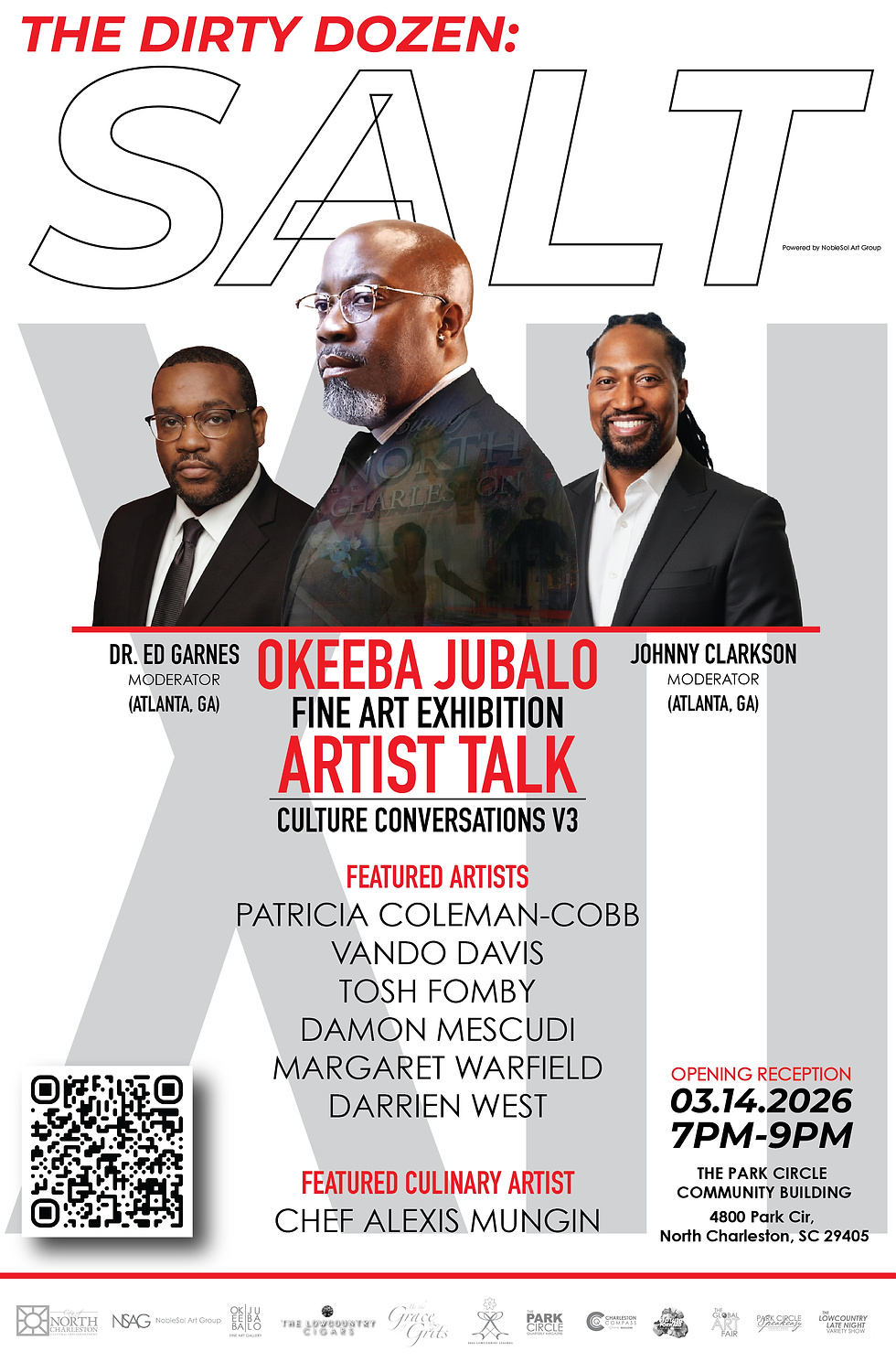
The title also reflects the signature structure of Jubalo’s work, in which he traditionally creates twelve pieces per exhibition. “I think of it like cooking,” he said. “Anytime you start a dish, you begin with a high level of salt. It’s the foundation for everything else.” Salt: The Dirty Dozen extends that principle metaphorically, focusing on resilience, creativity, and the intricate cultural threads of his community, while celebrating the people and influences that have shaped him as an artist and curator.
Jubalo’s work often transforms objects and experiences that might otherwise be overlooked. In one of his signature pieces, Beenya Gold, he uses oyster shells—a delicacy in his Charleston community—to elevate everyday cultural symbols into blue-chip art. “Oysters are celebratory,” he said, “and they’re expensive. You don’t eat them every day. This collection includes shells from a family gathering, along with several gifted by my friend Mitchell Crosby. Taking things we normally discard and making them into fine art speaks to the luxury and richness of our culture.”
The exhibition also represents a deliberate inclusivity. For the first time, Jubalo is including works by Atlanta-based artists alongside his own. “We’ve been able to acquire different eyes,” he said. “It’s important to include them in this celebration and movement because I want their work to be seen. We represent them, and I believe in their work. Sharing the stage strengthens the cultural dialogue we’re creating.”
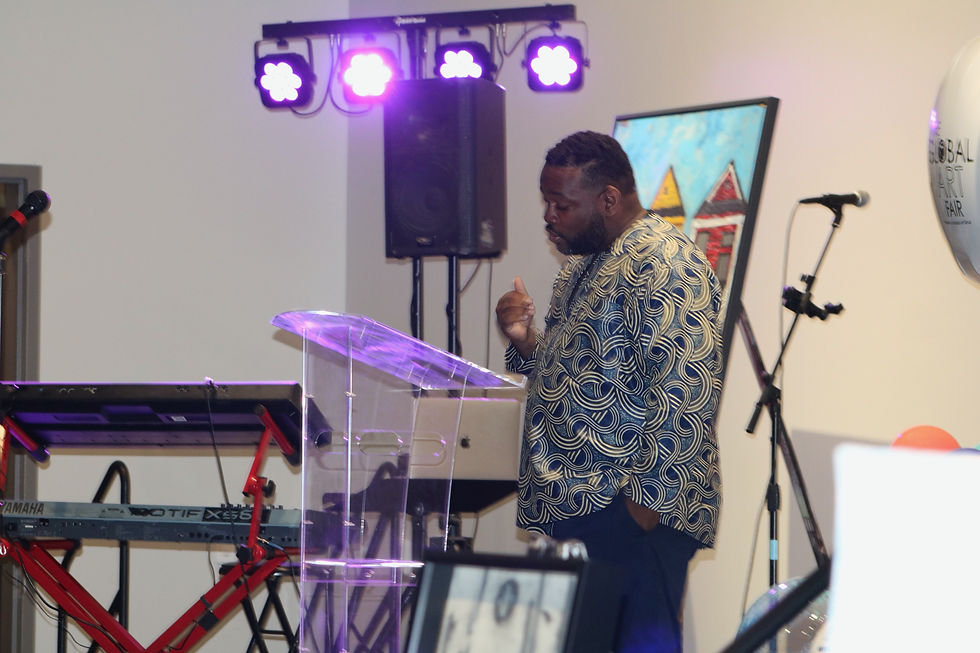

Supporters and collaborators of Jubalo’s work emphasize the impact of his exhibitions. Dr. Ed Garnes, founder of From Afros to Shelltoes & Sweet Tea Ethics, describes Jubalo’s art as “a kaleidoscope melding the tragedy and triumph of the Black experience.” On his approach, Garnes adds, “As an artist, Okeeba is not a prisoner to style, and whether abstract, collage, or figurative art, truth reigns. As a curator, his focus is on giving artists—redefining contemporary art—space to breathe and eat off their art.” Looking ahead to SALT, Garnes says, “Okeeba is selfless, but with SALT, I am excited he has chosen to show the world why his work matters. His exhibitions are healing, challenging, and always an emotional experience. This is the remedy to all of your misgivings about archaic notions of art.”


Chef Alexis Mungin, who will contribute culinary artistry to the exhibition experience, describes her excitement for the show: “This will be my first time experiencing Okeeba Jubalo’s solo work in an exhibition setting, and what excites me most is the opportunity to engage with his process—how materials are chosen and used, and how his current lived experiences show up in the work. I’m especially looking forward to hearing the stories behind the pieces and seeing how SALT reflects both growth and intention. I anticipate an exhibition that feels honest, layered, and rooted in reflection.” She continues, “Sharing food alongside his art feels like an extension of the experience—bringing people together and allowing them to engage more fully with the work.”


Johnny Clarkson, Executive Digital Director at NobleSol Art Group and a longtime collaborator, reflects on Jubalo’s past Atlanta exhibitions, including the 2017 Dirty Dozen Jim Crow Fantasies: “When you’ve had the privilege of witnessing greatness from behind the velvet rope, choosing a single highlight feels impossible—like trying to define LeBron James’ career by one jump shot. The production was layered with purpose: art, performance, and unapologetic Black visual empowerment. During the dinner sequence, a long communal table brought together influential community leaders and media figures, with Okeeba and Kat Brown at its head. It felt like a modern-day Last Supper—symbolic, intimate, and powerful.”
Clarkson describes Jubalo’s approach as “unwavering integrity, disciplined ethics, and a deliberate vision that leverages art to build and sustain community.” On SALT, he adds, “I’m most excited to witness the audience’s realization that his work surpasses every expectation they brought into the room. This is an experience you owe yourself if you consider yourself a collector, a contributor, or a true lover of the arts.”


Salt: The Dirty Dozen is both a personal and communal statement. Visitors will encounter Jubalo’s artistic transparency, which he describes as emotionally honest and unflinching. “I want people to remember their humanity,” he explained. “To experience grace, to allow themselves to feel. This show is about giving space for healing, for reflection, for joy.” The exhibition is deeply rooted in North Charleston, drawing on the city’s unique energy, history, and geography. Jubalo emphasizes the significance of place, describing the city as its own country, with a culture that permeates the work.
Jubalo’s approach to his craft is meticulous and intentional. Over the last four years, he has developed smaller versions of pieces in preparation for this solo exhibition, ensuring that his ideas and vision are cohesive and fully realized. The show will feature pieces ranging from intimate vignettes to large-scale works, some reaching eight to ten feet in size, signaling his entry into the museum market and the international art stage.
The impact of Jubalo’s work extends beyond aesthetics. It’s about community, mentorship, and legacy. “I’ve learned that it’s not just about me,” he said. “It’s about creating a platform where others can shine. We bring people back home through the arts, and we create a space where emerging artists can be seen and celebrated.” By connecting his exhibition to local history, culture, and the experiences of those who have shaped the community, Jubalo positions Salt: The Dirty Dozen as more than a display of art—it is a statement on heritage, resilience, and the transformative power of culture.
Visitors to the exhibition can expect an immersive experience. Jubalo wants audiences to feel transparency, honesty, and a deep connection to the stories embedded in each piece. “If visitors leave remembering one thing,” he said, “I want them to know that we are enough. We have what we need to uplift our community and to continue building a legacy that reflects our creativity, resilience, and shared humanity.”

As Salt: The Dirty Dozen launches, Jubalo is already thinking ahead. The exhibition serves as the national and international kickoff of his work, with the potential to influence the broader art world while remaining rooted in the South Carolina communities that have nurtured him. “This is our Harlem Renaissance,” he said. “We may not always see it in real time, but we’re in the midst of it, and history will recognize it.”
With Salt: The Dirty Dozen, Okeeba Jubalo offers both a personal narrative and a collective one. It is a reflection of a lifetime of artistic practice, community engagement, and cultural storytelling. It is, ultimately, an invitation: to witness, to feel, and to participate in the ongoing movement of art, culture, and heritage that he has cultivated with care, courage, and unwavering vision.
RSVP for Salt: The Dirty Dozen: https://www.okeebajubalogallery.com




Comments