
LOCAL: THE LONG WAY HOME
Updated: Apr 4

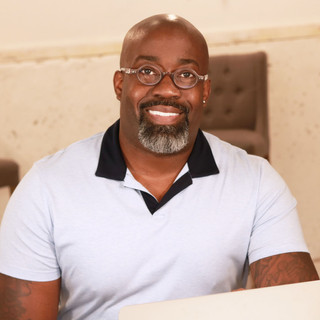
Returning home to Charleston in 2021 wasn't a retreat; it was a deployment. Whether it’s through my media platforms, growing small businesses with our branding agency, my documentary series The Long Way Home, our art exhibitions, or standing on a stage at the Charleston Library Society, my mission remains the same: I am here to show that the kid from North Charleston didn't just "make it out"—he came back with the blueprints to build something better for everyone.
Being chosen as a featured speaker at CreativeMornings Charleston served as a reminder that when you are intentional about your growth, your reach and your community grow with you. The work is far from over, but the vision has never been clearer.

On Friday morning, March 27, 2026, as I looked out at the audience at the Charleston Library Society, I was struck by the contrast between that refined room and the raw, quiet house on Ashley Phosphate Road where my childhood shifted forever—33 Stratton Drive. To understand why I am so intentional about my work today, you have to understand the silence that fell over my life when I was only ten years old.
That was the year my father, Jessie "Slim" Brown, passed away from lung cancer.
In an instant, the world stopped being a playground and became a troublesome weight my narrow shoulders had to learn how to carry. Most kids that age are worried about the next game or a school project; I was suddenly staring at the void left by the man who was supposed to show me how to be a man. Watching his strength fade was a brutal introduction to mortality and responsibility. It didn't just sadden me—it transformed me. I had to raise myself. During those times when I really missed him, the mirror was the only constant reminder that even though my dad was no longer here, he would always be here as long as I was here.
The Accelerated Path to Manhood
Losing a father at that age doesn't just leave a hole in the family; it forces a child to grow up in the cold, razor-sharp margins of America. Because I was the only boy following two powerhouse sisters, I felt a distinct, internal pressure to step up. I had to develop a level of discipline and self-reliance that most of my peers wouldn't touch for another decade, if at all. On my dad’s deathbed, he told me that I was in charge and I would have to figure it out, come hell or high water.
Observation as Survival: I couldn't ask my father for advice on how to navigate the world, so I became a "silent expert." I watched, I listened, and I decoded the mechanics of respect and hard work on my own.
The Weight of the Name: I realized early that "Slim" wasn't just a nickname; it was a reputation. Carrying that legacy while being bused from North Charleston to Summerville, eventually graduating from Irmo High School, required a level of mental toughness that became the foundation of my professional drive.
Turning Pain into Purpose: That early loss is why I don’t play with time, and I don’t let anyone play with me or my time. I learned at ten years old that tomorrow isn’t a guarantee, so every move I make today—every gallery opening, every mentorship, every word spoken—must have an immediate and lasting impact.

Weaponizing the Void
When I talk about "weaponizing the arts," people often think of the finished product. But for me, the "weapon" was forged in the fire of that early grief. I took the discipline I had to learn as a fatherless ten-year-old and applied it to my craft. I didn't just want to create art; I wanted to create a stronghold. A king must have a kingdom, and I wanted a safe space for those who believed in what I believed. Creativity is the answer to the problems within our communities.
I used the arts to build the world I wanted my father to see. Every success is a tribute to the man who met my mother in the concrete jungle of New York City and brought us back to the Lowcountry. I am the son of Jessie Brown, and while cancer took his breath, it couldn't take the vision he planted in me. Standing on that stage in the Charleston Library Society, I wasn't just speaking for myself—I was speaking for my community and the boy who had to become a man overnight, proving that even from the deepest loss, you can build a legacy that towers over the city.
The morning air was heavy with more than just history; it was heavy with the truth of a journey that spans numerous cities with very different philosophies of success. To understand my work, you have to understand the collision between the "celebrity" I witnessed in Atlanta and the "credibility" I was forged in here in North Charleston.

During my nearly thirty years in Atlanta, I saw a recurring pattern. In the "City Too Busy to Hate," there is an intoxicating pressure to chase “celebrity” status. I watched people build entire careers on the appearance of power—chasing the right rooms, the right photos, and the loudest buzz. In that model, elevation is measured by how many people know your name, not necessarily by what you’ve built with your hands.
I saw the trap clearly: If your elevation is based on celebrity, you are only as strong as your last trend. I never bought into that model. I didn't move to Atlanta to be "famous"; I moved there to become a master of my craft. While others were curating an image, I was in the trenches at the Art Institute, later at NobleSol Art Group and Young Black Entrepreneur Magazine, obsessing over the mechanics of branding, the strategy of the arts, and the weight of a finished product.


The North Charleston Reality: The Power of Proof
The reason I rejected the celebrity model is because I am a product of North Charleston. On Ashley Phosphate Road, you don’t get a pass for talking a good game. Growing up in a community that had to fight for its resources and its respect, I learned a fundamental law of survival: You must be able to do exactly what you speak about.
In the Lowcountry, credibility isn't given; it’s earned through repetition and results.
If I speak on art, it’s because I’ve spent decades at the canvas and the drafting table.
If I speak on community, it’s because I’m building the gardens and the galleries myself.
If I speak on legacy, it’s because I’ve lived the cost of losing a father at ten and had to build my own foundation from the dirt up.
North Charleston taught me that "Weaponizing the Arts" requires a sharp blade, not just a shiny one. Celebrity is a coat of paint; credibility is the structure of steel and iron underneath.
Closing the Circle
Standing in the Charleston Library Society, I wasn't there as a "celebrity" returning from the big city. I was there as a son of Charleston who went away to gain the tools, refused to lose his soul to the glitter of the industry, and came back with my respect and receipts.
I don't want to be known for being known. I want to be known for the work that remains when the lights go down—the books, the films, the art, and the institutions that will serve our community long after I’m gone. That is the difference between a moment and a movement.


Comments