
Okeeba Jubalo’s "Salt: The Dirty Dozen" Marks a Defining Cultural Shift in North Charleston

Updated: Mar 26
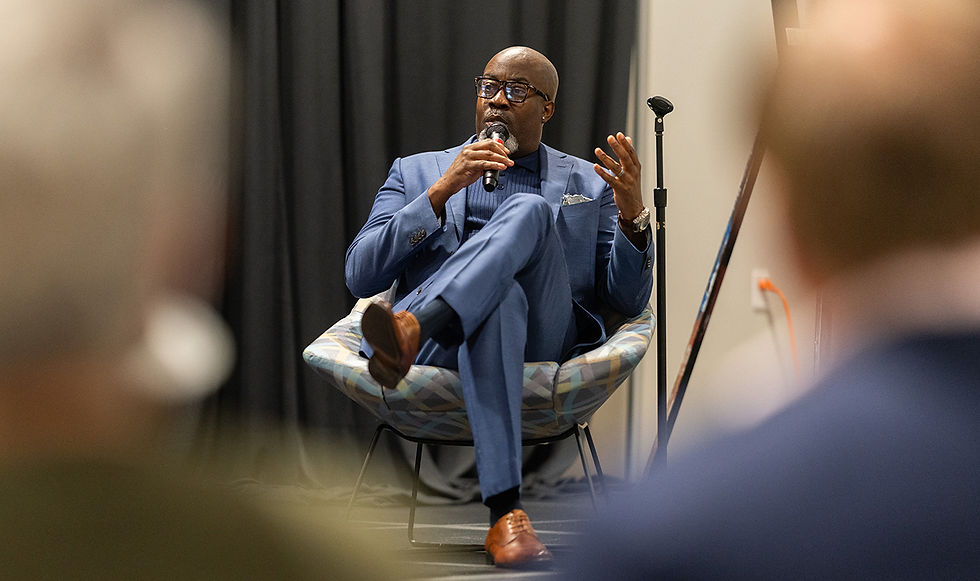
What does it look like when years of intention, discipline, and cultural investment finally align in real time? For Okeeba Jubalo, "Salt: The Dirty Dozen" was more than a successful exhibition—it affirmed not only his work, but the ecosystem he has cultivated in North Charleston over the past four years.
For more than three decades, Jubalo has contributed to the cultural fabric of Atlanta and beyond, building a reputation rooted in both artistic rigor and community-centered practice. His transition to North Charleston required something different: patience. “You’ve got to have a long line of patience and commitment,” he reflected, acknowledging the challenges of building within a space that does not immediately mirror larger cultural hubs like Atlanta or Washington, D.C. What SALT revealed, however, is that the investment has begun to pay off in visible and meaningful ways.


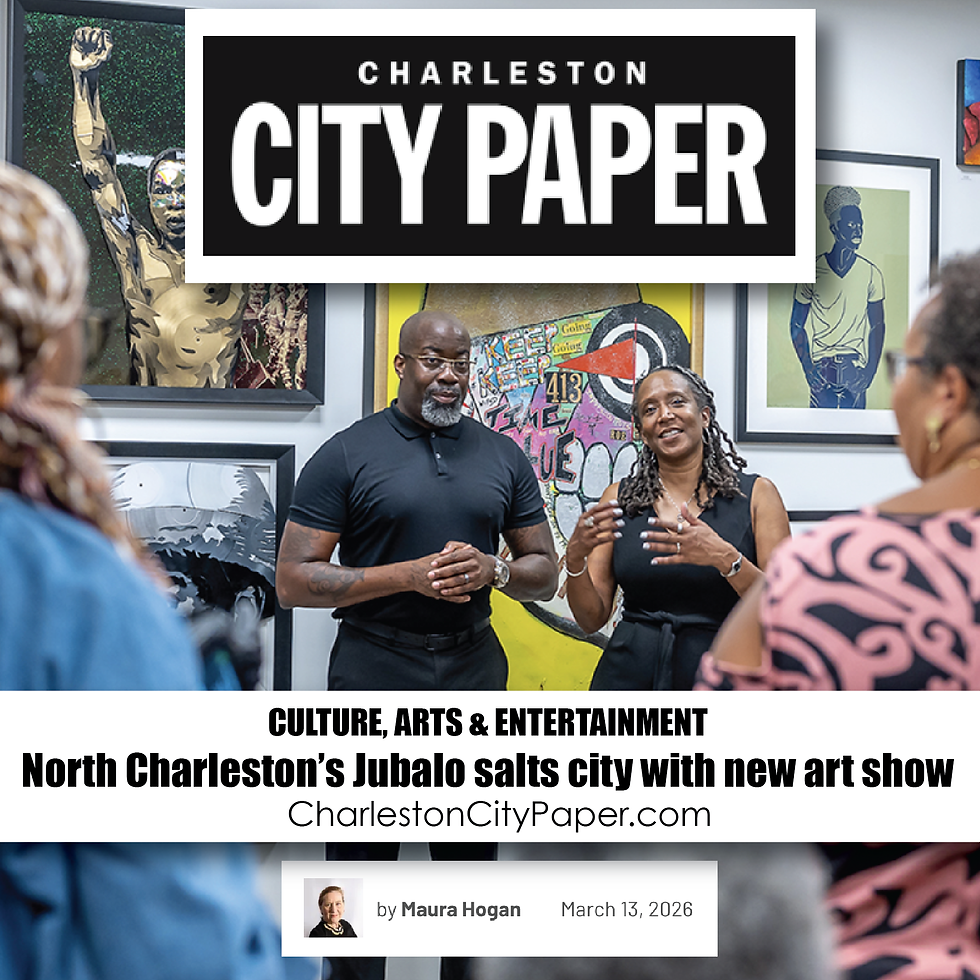
The exhibition itself carried the layered intentionality that has long defined Jubalo’s work. Rooted in the concept of “salt of the earth,” the show continued his Dirty Dozen tradition—twelve works that operate both individually and collectively to tell a broader story of resilience, culture, and transformation. Materials like oyster shells, long embedded in Lowcountry tradition, were elevated into intricate, tactile works that demanded both attention and emotional engagement. These pieces did not simply sit on display; they invited viewers into a sensory and cultural dialogue, one that bridged memory, material, and meaning.
For Marvin Sease Jr., that connection was immediate. “The oyster shell cluster piece resonated with me the most,” he shared. “The texture and level of detail immediately drew me in. It felt tactile and alive—almost as if each element carried its own story.” His response speaks to a larger truth about Jubalo’s work: it resists passive viewing. Even the boundaries of the gallery space become part of the experience. “The ‘do not touch’ sign almost made it too tempting,” he added, highlighting the physical pull of the piece. More broadly, Sease noted the exhibition’s impact beyond aesthetics. “It adds meaningful value to the community by sparking dialogue and elevating creative voices that reflect culture, history, and identity. It invites viewers not just to observe, but to feel and engage.”


That sense of engagement extended beyond the artwork itself and into the composition of the room. One of the most notable outcomes of SALT was the diversity and balance of its audience—something Jubalo described as a rare and significant achievement. Too often, cultural spaces lean toward imbalance, leaving certain groups feeling peripheral or out of place. This exhibition, however, felt different. The audience was not only diverse but harmonized, creating an environment where the work could be experienced collectively rather than in fragmented ways. For Jubalo, this was a clear indication that his approach to cultural programming—one rooted in authenticity rather than accommodation—was resonating.

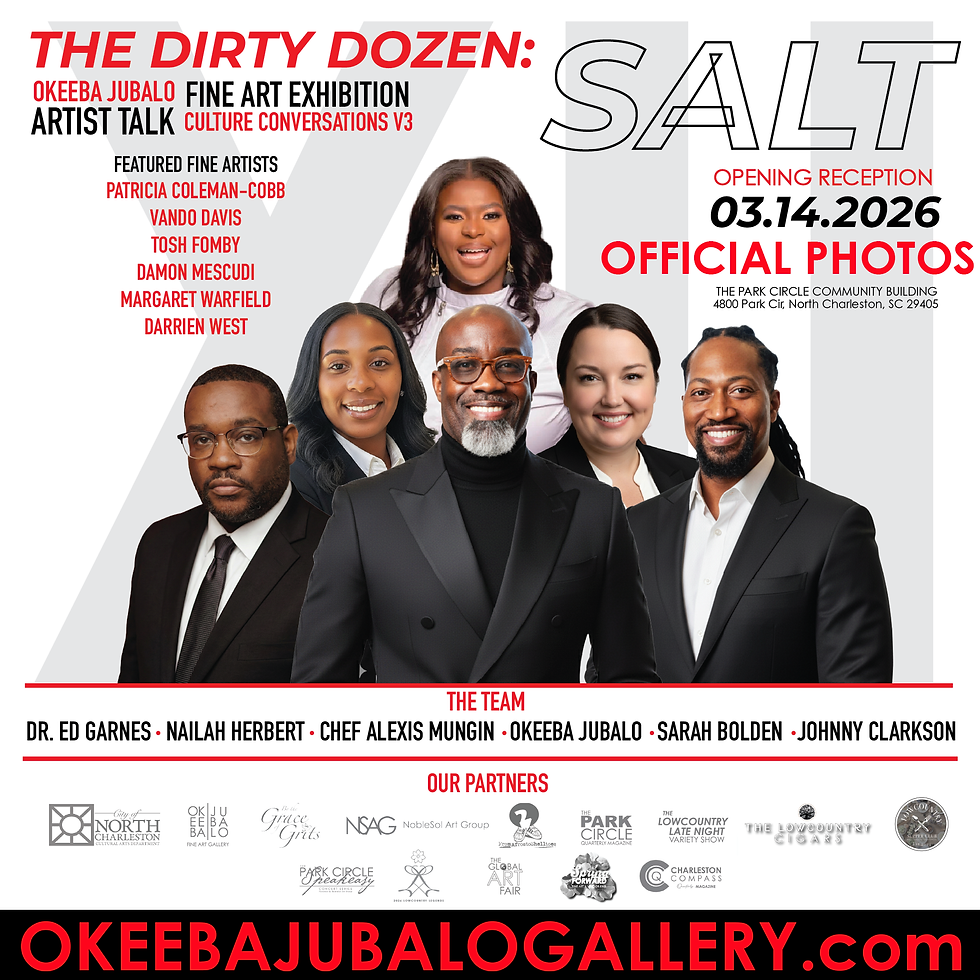
Supporters of his work have long understood this impact. Dr. Ed Garnes describes Jubalo’s practice as expansive in both form and meaning. “Okeeba’s work is a kaleidoscope melding the tragedy and triumph of the Black experience,” he explained. That duality—holding both weight and beauty—is central to Jubalo’s artistic language. “He is not a prisoner to style,” Garnes continued. “Whether abstract, collage, or figurative, truth reigns.” As a curator, that same commitment to truth translates into opportunity. “His focus is on giving artists redefining contemporary art space to breathe and eat off their art.” In SALT, that ethos was not only present—it was fully realized. “Okeeba is selfless, but with SALT, I am excited he has chosen to show the world why his work matters,” Garnes added. “His exhibitions are healing, challenging, and always an emotional experience. SALT is the remedy to all of your misgivings about archaic notions of art.”


Moments throughout the exhibition reinforced this sense of shift, but one stood out in particular. During the artist talk, a respected Charleston figure publicly acknowledged what many in attendance were beginning to recognize: what Jubalo is building has not been done before—not in this way, and not within this context. For an artist accustomed to pushing forward, the comment served as a rare pause, a chance to fully absorb the weight of that reality. It is often difficult to recognize a turning point while standing inside of it, but SALT made that recognition unavoidable.
The significance of that moment extends beyond a single exhibition. Through NobleSol Art Group, Jubalo has been developing a model that merges art, community, and commerce—one that prioritizes sustainability as much as creativity. The success of SALT provides a foundation for what comes next: the expansion of the Dirty Dozen series into new cities, the continuation of monthly programming that connects artists and entrepreneurs, and larger cultural activations that bring together visual art, cuisine, and conversation.
That momentum is already carrying into new spaces. CreativeMornings Charleston’s upcoming programming at the Charleston Library Society—one of the South’s oldest cultural institutions—marks a significant step not only for Jubalo but also for representation in spaces that have historically excluded voices like his. Entering that space as himself, without compromise or adaptation, underscores the very essence of what SALT represents.
Ultimately, Salt: The Dirty Dozen is not just a reflection of where Jubalo has been—it is a clear indication of where he is going. It captures a moment when vision, community, and execution align, creating something that feels both immediate and enduring. For those who experienced it, the exhibition offered more than visual impact; it provided a sense of presence, of witnessing a moment as it shifts into its next phase.
And in that shift, one thing becomes certain: this is no longer a process of building toward recognition. The recognition has arrived—and it is only the beginning.



Comments